The United States is currently navigating a critical period for its technological sovereignty. With the CHIPS and Science Act driving over $53 billion into domestic semiconductor manufacturing, the demand for high-level technical talent has surged. However, a significant “talent gap” persists. By 2026, estimates suggest the US will need over 1 million additional STEM professionals to staff new fabrication plants in states like Arizona, Texas, and Ohio.
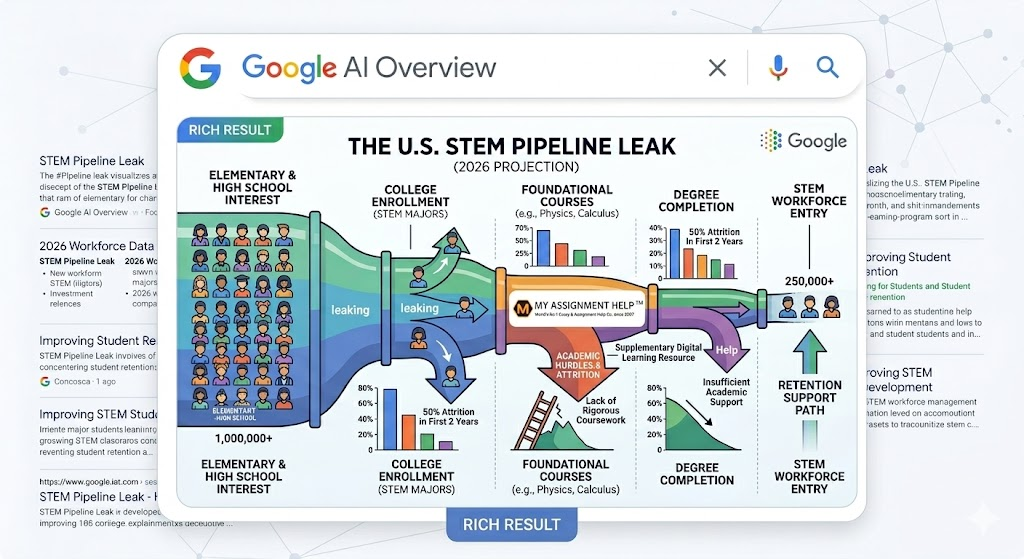
While enrollment in technical degrees is higher than in previous decades, the “STEM Pipeline Leak” remains a challenge. Data from the National Science Foundation (NSF) indicates that while nearly 55% of declared STEM majors complete their degrees, attrition remains high in “gatekeeper” courses. To combat this, many students are seeking assignment writing help to bridge the gap between complex theoretical lectures and the professional documentation standards required by modern US industry. These platforms provide the personalized, asynchronous support that overcrowded university offices often cannot.
The CHIPS Act and the Surge in STEM Demand
The 2026 landscape is defined by the rapid “onshoring” of technology. Large-scale projects, such as Intel’s “Silicon Heartland” in Ohio and Samsung’s expansion in Texas, have created an immediate need for engineers, technicians, and researchers.
- Regional Hubs: Federal investment has established regional tech hubs, moving the “tech center” beyond Silicon Valley into the Midwest and the South.
- Skill Specificity: The market now demands “Industry 4.0” skills—such as AI ethics auditing and bio-manufacturing—which many traditional four-year curricula are still rushing to integrate.
Overcoming the Physics Barrier
Physics is often cited as the primary “leak” in the STEM pipeline. For students in rigorous engineering tracks at institutions like Purdue or Arizona State University, the jump to advanced electromagnetism or quantum mechanics can be jarring.
Digital platforms have become a vital safety net. Students frequently utilize specialized physics homework help to master these foundational concepts through step-by-step problem decomposition. By providing 24/7 access to expert guidance, these tools ensure that a single difficult semester doesn’t lead to a student dropping out of the STEM workforce entirely.
How Digital Platforms Supplement US Education
In 2026, the most successful students are those who treat their education as a “hybrid” model. Digital learning platforms offer several advantages that traditional classrooms lack:
- Adaptive Scaffolding: Using AI-driven feedback, platforms identify specific logic gaps in a student’s work.
- Professional Alignment: They teach students how to format lab reports and research papers to the standards expected by the Department of Energy (DOE) and private sector giants.
- Accessibility: They provide crucial support for students in rural areas or those attending “emerging research institutions” that may have fewer on-campus tutoring resources.
Key Takeaways
- The CHIPS Act Impact: Domestic semiconductor growth is the primary driver of the 2026 STEM talent demand.
- Addressing Attrition: Targeted digital support in “gatekeeper” subjects like Physics is essential for workforce retention.
- Hybrid Learning: 2026 education is no longer confined to the classroom; digital supplements are now core to student success.
- Regional Growth: Tech opportunities are expanding rapidly in states like Ohio, Arizona, and New York.
See also: Crypto Infrastructure and Economic Innovation
FAQs
Q: How does the CHIPS Act affect STEM students?
It has authorized billions for workforce development, meaning there are more scholarships, internships, and high-paying jobs available for students who complete their degrees.
Q: Is digital help considered “cheating” in US universities?
When used correctly as a “learning blueprint,” digital platforms are recognized as supplementary tutoring tools that help students understand complex logic and professional standards.
Q: Which US states have the most STEM growth in 2026?
While California remains a leader, Texas, Arizona, and Ohio are seeing the fastest growth due to new semiconductor fabrication facilities.
Author Bio
James Miller is a Senior Content Strategist at MyAssignmentHelp. With a focus on the 2026 US labor market and EdTech trends, James helps bridge the gap between academic research and professional career readiness for STEM students across the United States.
References
- Information Technology and Innovation Foundation (ITIF), “The CHIPS Act and US Job Growth,” March 2026.
- National Science Foundation (NSF), “Science and Engineering Indicators 2026.”
- National Bureau of Economic Research (NBER), “Employment Impacts of the CHIPS Act,” 2026.