The intersection of technology and food production presents a complex landscape. Innovations like vertical farming and gene editing offer potential solutions to the challenges of urbanization and climate change. Automation and robotics enhance efficiency, while advancements in supply chains improve safety and traceability. However, the implications of these technologies extend beyond mere efficiency. Exploring their broader effects on sustainability and food security reveals questions that merit further examination. What might the future hold for global food systems?
The Role of Vertical Farming in Sustainable Food Production
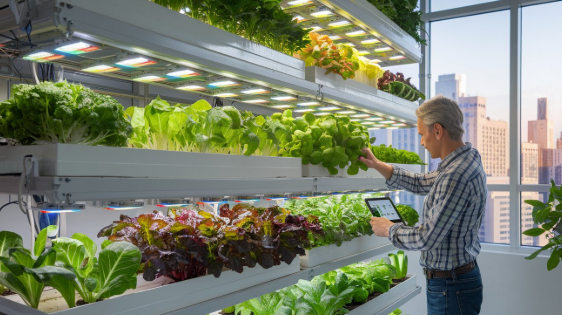
As urban populations continue to rise and arable land diminishes, vertical farming emerges as a pivotal solution for sustainable food production.
This innovative approach enhances energy efficiency and promotes urban agriculture, allowing cities to thrive without compromising soil health.
See also: Technology and the Future of Digital Communication
How Is Gene Editing Revolutionizing Crop Resilience?
Gene editing is fundamentally transforming crop resilience, offering unprecedented solutions to the challenges posed by climate change, pests, and diseases.
CRISPR technology enables precise genetic modifications that enhance crop traits, improving yield and resistance.
These innovations represent significant advancements in resilience strategies, allowing farmers to adapt to environmental stresses effectively.
Ultimately, gene editing paves the way for sustainable and robust agricultural systems.
The Impact of Automation and Robotics on Agriculture
The integration of automation and robotics into agriculture is revolutionizing traditional farming practices, complementing advancements in gene editing by enhancing efficiency and productivity.
Precision agriculture leverages autonomous machinery to optimize resource use, reduce waste, and improve crop yields.
This transformation not only empowers farmers with greater control over their operations but also addresses the pressing demand for sustainable food production in an evolving global landscape.
Innovations in Food Supply Chains: Ensuring Safety and Efficiency
While traditional food supply chains have faced numerous challenges, recent innovations are reshaping these systems to enhance safety and efficiency.
Blockchain transparency enables traceability, ensuring consumers can trust the origins of their food.
Additionally, supply chain optimization techniques streamline processes, reducing waste and improving response times.
Together, these advancements not only enhance food safety but also promote a more resilient and efficient food production system.
Conclusion
As the horizon of food production shifts, the convergence of technology promises to sculpt a more sustainable future. Imagine fields of vertical farms rising against urban skylines, crops resilient to climate shifts, and autonomous robots tirelessly tending to every need. Yet, lurking beneath this innovation lies a question: will these advancements be enough to combat the looming threats of resource scarcity and food insecurity? The answer, as the world watches closely, remains tantalizingly just out of reach.